
Should You Choose Software Development in 2026? An Honest Answer
The entry bar moved up, but the work still exists. Here's who should pursue software development in 2026, who shouldn't, and what the numbers actually say.
~13 min read
Yes, software development is still worth pursuing in 2026, but not the way YouTube thumbnails sell it.
If you expect a six-month bootcamp, a certificate, and a ₹12 LPA offer in Bangalore, you will probably be disappointed. If you treat it as a long game of building, debugging, and shipping real things, the career still offers unusual upside: remote income, global clients, and skills that compound for decades.
I'm a BCA student in Jaipur. I don't have an IIT stamp on my resume. What I do have is a public GitHub, internships that started because someone clicked my repos, and Study Stream Black, a desktop app I actually maintain. That path is slower than influencer marketing promises. It is also real.
This post is for students in tier-2 cities, BCA/BCOM/MCA folks, and career switchers asking the same question I asked in 2023: Is this still a good bet, or am I three years late?
What software development actually is (not the Instagram version)
Software development is not "learning Python." It is turning ambiguous human problems into systems that run reliably when users, networks, and deadlines misbehave.
Day to day, that means:
- Reading other people's code (often badly documented)
- Breaking problems into smaller pieces
- Writing code, yes, but also tests, logs, and rollback plans
- Explaining trade-offs to non-technical stakeholders
- Fixing production issues at inconvenient hours
The job is closer to craft + troubleshooting than to memorizing syntax. Syntax is the easy part. Copilots already handle a chunk of it.
If that sounds tedious, you won't hate coding. You will hate professional coding. There is a difference.
What changed between 2020 and 2026
Four shifts matter if you are deciding now.
1. AI compressed the easy layer
Boilerplate CRUD, test scaffolds, README drafts, and "make me a REST endpoint" tasks take minutes instead of hours. That does not eliminate developers. It raises the floor for what counts as useful output.
Hiring managers in 2026 rarely pay for someone who only generates snippets. They pay for people who know when the snippet is wrong.
2. Entry-level hiring got selective
This is the uncomfortable part.
In India, industry reports describe a move from volume hiring to skill-mix hiring. NASSCOM's Strategic Review 2026 projects roughly 135,000 net new tech jobs in FY26, with total direct tech employment approaching 6 million. That is growth, not collapse.
But the same reports describe hiring shifting toward specialized roles, AI fluency, and immediate productivity. EY analysis cited in Indian business press estimated entry-level IT roles down 20–25% as automation absorbs routine coding and testing work. Campus intake at large IT services firms is not what it was in 2015.
In the US, the picture rhymes. The Bureau of Labor Statistics still projects 15% growth for software developers through 2034 (down from an earlier 22% estimate, but still far above the ~3% average for all occupations). Meanwhile, Stanford Digital Economy Lab research using payroll data found software developers aged 22–25 down nearly 20% from a late-2022 peak, while older cohorts in the same field fared better.
Translation for a BCA fresher in Jaipur: jobs exist, but "fresher" no longer means "we'll train you for six months." You need proof earlier.
3. Proof beats pedigree (especially outside metro hubs)
Bangalore and Hyderabad still cluster big-brand hiring. Jaipur, Kota, Udaipur, and most Rajasthan cities do not have that density.
What works here is what worked for me: public artifacts. Repos with READMEs, demo links, one flagship project you can walk through on a call, and a portfolio that shows up when someone Googles your name. I wrote about that in Developer Portfolio SEO and GitHub projects that get interviews.
Recruiters in 2026 are skeptical of training-institute portfolios that all look identical. They remember the candidate who built something weird and specific.
4. Specialization pays faster than "full stack" on a slide
"I know MERN" is crowded. "I shipped an Electron desktop app with offline storage and CI releases" is a sentence.
Security, DevOps, data engineering, embedded + software, AI integration (not AI hype), and domain-heavy roles (healthcare, fintech, logistics) still have talent gaps. General HTML/CSS/JS without depth is the most commoditized layer.
The India job market in numbers (what you can cite in interviews)
| Signal | What it suggests |
|---|---|
| ~$315B Indian tech sector (FY26 projection, NASSCOM) | Industry is still expanding, not shrinking |
| ~135K net hires FY26 | Openings exist, but not for everyone |
| 2.3% workforce growth | Slower than the 2010s hiring wave |
| Entry-level decline ~20–25% (EY/industry reporting) | First job is the hard gate |
| AI revenue share still ~5–6% of IT topline (NASSCOM) | Transformation is early, not finished |
None of this says "don't study CS." It says the first job requires a sharper wedge than it did five years ago.
For Jaipur specifically: local service companies, startups, remote-first agencies, and GCC back offices hire MERN/Next.js/mobile developers when you can demonstrate delivery. My internships (Pratink, Edunet, Hopdays) happened because I had work to show, not because Jaipur is a mini-Bangalore.
Who should pursue software development
You are a reasonable fit if most of these are true:
You finish things. Half-built todo apps do not count. One deployed project with users (even five classmates) beats ten unfinished repos.
You can tolerate confusion. Specs change. APIs break. AI gives confident wrong answers. If ambiguity makes you shut down, the job will feel like constant stress.
You will read documentation. Not optional. Not "I'll ask ChatGPT." Primary sources matter when the model hallucinates a method that never existed.
You are willing to relearn tools. Frameworks age. I started with random MERN tutorials; I ship Next.js and Electron now. That churn never stops.
You like making things people touch. Software development is creative in a concrete way. If that energizes you, the career sustains through boring sprints.
Who should think twice (honestly)
You want guaranteed outcomes from a fixed syllabus. BCA already has enough theory without application. Adding a 90-day bootcamp without projects is not a career plan.
You hate debugging. If your instinct is to restart instead of reading the stack trace, you will struggle. AI helps, but someone still owns the bug.
You need immediate high salary without portfolio proof. First roles in tier-2 cities might start modest. Remote US/EU contracts are possible but not automatic. Remote work in 2026 rewards people who already shipped.
You dislike continuous learning. This field punishes coasting harder than most. AI makes coasting even more dangerous because juniors compete with tools that never sleep.
You only want coding because "IT pays." It can pay well, but so can accounting, nursing, skilled trades, and sales, often with clearer early paths. Choose development because you tolerate the work, not because a cousin said so.
What BCA students in Rajasthan should do differently
No sugarcoating: BCA is not a brand. It is a starting point.
What helped me:
-
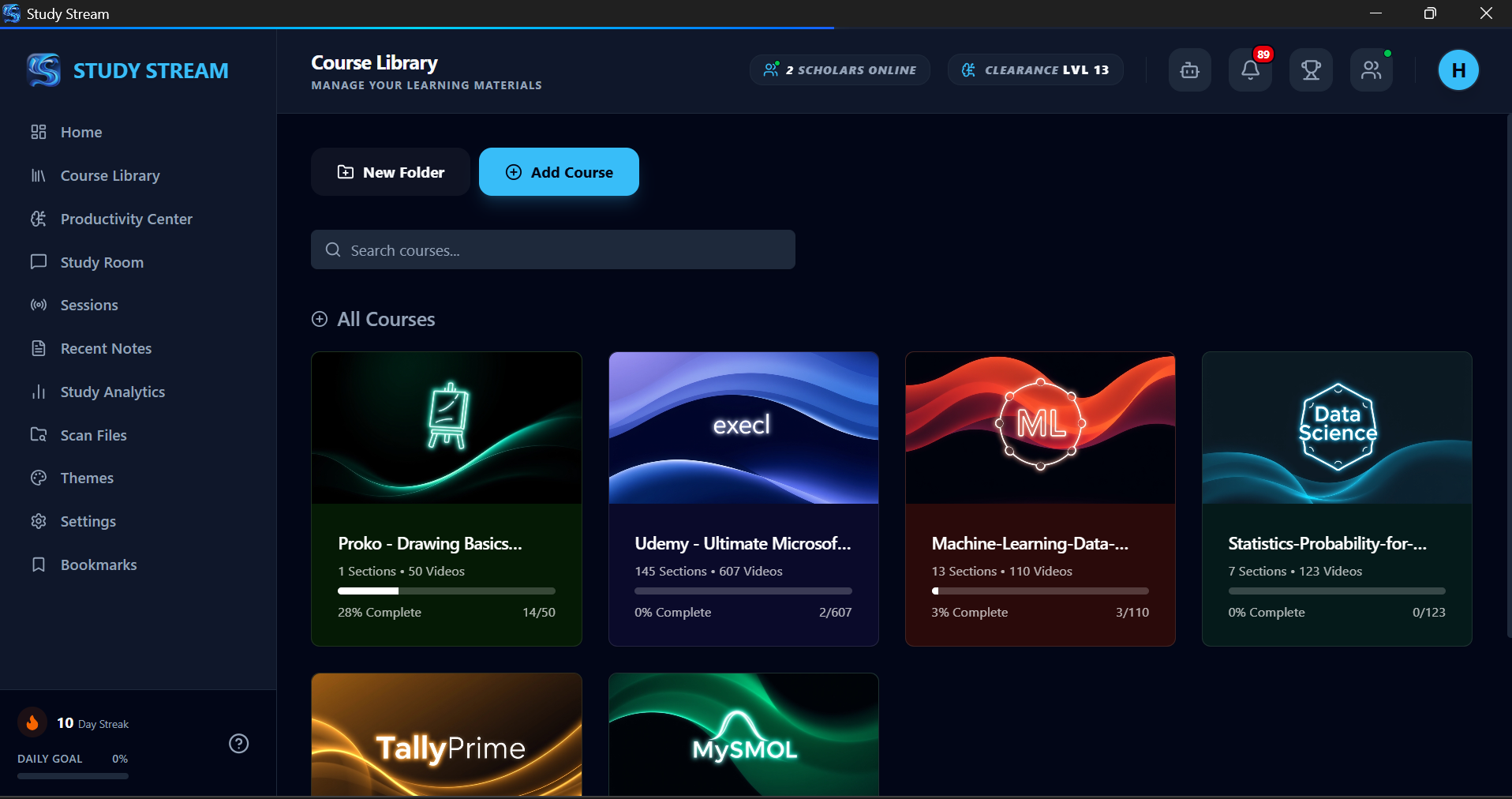
One flagship project, Study Stream Black taught me Electron, Next.js, release hygiene, and how users actually behave. One deep project > six shallow clones.
-
Internships as feedback loops, Even unpaid or low-paid stints show you how teams use Git, code review, and deadlines. My path is documented in From BCA student to software developer in Rajasthan.
-
Write in public, Blog posts force clarity. They also rank. When a recruiter searches "Rohit Singh developer Jaipur," my site shows up. That is free distribution.
-
Stack depth over stack tourism, Pick one backend, one frontend, Git, basic Linux, deployment. MERN patterns for production matter more than chasing every new framework tweet.
-
AI literacy without AI dependency, Learn when copilots help (scaffolding, refactors) and when they hurt (security, subtle logic bugs). See LLM coding tools vs traditional development.
Salary expectations (India, 2026, realistic bands)
Numbers vary by city, company tier, and your proof. Treat these as orientation, not promises:
| Stage | Typical range (INR, annual) | Notes |
|---|---|---|
| First internship | ₹8K–25K/month stipend | Often the real interview |
| First full-time (tier-2 city) | ₹3–6 LPA | Common for service firms |
| First full-time (metro / product) | ₹6–12 LPA | Needs strong DSA + projects |
| 2–4 years, product/remote | ₹12–25+ LPA | Specialization matters |
Remote international contracts can jump these bands, but they usually require demonstrated English communication, timezone overlap, and prior shipped work. Not entry-level luck.
A 12-month de-risk plan (if you are starting now)
You do not need a perfect plan. You need a repeatable loop.
Months 1–3: Foundations + one small shipped thing
- Git, JavaScript or Python (pick one), HTTP basics, one deployed static site or API
- Document it: README, screenshot, live URL
Months 4–6: One non-trivial project
- Auth, database, error handling, basic tests
- Solve a problem you actually have (education, local business, productivity)
Months 7–9: Internship or open-source contributions
- Apply with the project link first, resume second
- Respond to issues on repos you use
Months 10–12: Flagship + content
- Extend the project or build v2
- Publish two technical posts (even on your own portfolio blog)
- Optimize portfolio SEO (guide here)
If you complete that loop, you are ahead of most "I completed a course" applicants I see in Jaipur Telegram groups.
Common mistakes I see from BCA peers in Jaipur
These slow people down more than "wrong framework choice."
Tutorial infinity loops. Thirty hours of video, zero commits. Pick one course, pause after each module, rebuild the lesson without looking. If you cannot rebuild it, you did not learn it.
Identical bootcamp portfolios. Recruiters in India have seen the same e-commerce clone hundreds of times. Differentiate with a problem you actually have: campus scheduling, local shop inventory, offline exam prep.
Ignoring English and communication. Remote roles die in the first call if you cannot explain your project in two minutes. Code gets you the interview. Clarity gets you the offer.
Skipping fundamentals for frameworks. If you do not understand HTTP, you will not debug API issues. If you avoid Git, team internships will hurt. Deploy a real portfolio forces you to learn both.
Waiting for the perfect idea. Study Stream started ugly. v1 matters more than v4 in your head. Ship, then iterate in public (why I built it).
Remote vs local: what tier-2 students should expect
Jaipur is not Bangalore for walk-in opportunities. That is fine.
Local pros: Lower living costs, some service companies and startups, growing co-working scenes, internships you can attend in person.
Local cons: Fewer campus drives from top product firms, smaller meetup density, less "friend got placed at X" social proof.
Remote pros: Access to national and global employers if your GitHub and English hold up. Documented in remote work for developers.
Remote cons: Timezone friction, higher communication bar, more competition per posting.
My approach: build remote-ready proof locally. Internships can be Jaipur or remote; the artifact is what travels.
What interviews actually test in 2026
From my screens and friends' reports:
- Walk through one project deeply (architecture, bugs you fixed, what you'd redo)
- Live debugging or take-home with realistic constraints (not only LeetCode hard)
- Basic DSA at easy–medium for product companies; lighter for many service firms
- "How did you use AI on this?" followed by "how did you verify it?"
They are not asking if you memorized QuickSort on a whiteboard for every role. They are asking if you ship and explain.
Alternatives worth considering
Software is not the only high-upside path in 2026.
- Data/analytics if you like spreadsheets and SQL more than UI
- DevOps/cloud if you prefer systems over feature work
- Cybersecurity if threat models interest you (developer security basics)
- Product/design if you think in user flows
- Skilled trades + software, IoT, robotics, industrial automation (electronics + software convergence)
You can also combine: BCA + software + domain (agri-tech, ed-tech, health) beats generic "web dev."
Verdict: should you choose software development in 2026?
Choose it if you want a career built on shipping, learning, and fixing real systems, and you accept that the first year is harder than TikTok suggests.
Skip it if you want a stable syllabus, hate debugging, or only chase salary without building proof.
The industry is not dying. The easy on-ramp is. That favors builders who start before they feel ready.
I'm still in college and still interning. I do not have a decade of hindsight. I have a narrow, honest view from Jaipur: the students who win are not the loudest on LinkedIn. They are the ones with a link you can click.
FAQ
Is software development still worth it in 2026 for BCA students?
Yes, if you supplement BCA coursework with shipped projects and internships. The degree alone is rarely enough for competitive first roles, but BCA plus a strong portfolio can absolutely work, I am living that path.
How hard is it to get a first developer job in India now?
Harder than 2019, easier than "Twitter doom" suggests. Net hiring is positive, but entry-level slots shrank. Expect more rejections and plan for 6–18 months of building before a full-time offer unless you have strong referrals.
Can I become a software developer from Jaipur without moving to Bangalore?
Yes. Remote roles, Jaipur-based startups, and service companies hire MERN/Next.js developers. Local network is thinner, so online proof matters more. See Web developer Jaipur MERN Next.js.
Should I learn AI before learning to code?
Learn coding fundamentals first: variables, functions, HTTP, Git, debugging. Then add AI tools as accelerators. Teams hire people who can verify AI output, not people who only prompt.
Is a coding bootcamp enough?
Only if it ends with your project in production, not a cloned e-commerce app identical to fifty other graduates. Bootcamps are compression, not substitution for building.
What stack should I learn in 2026?
Depth beats fashion. MERN or Next.js + Node + PostgreSQL + Git + basic deployment covers most junior web roles in India. Add TypeScript when JavaScript stops feeling scary (TypeScript + React guide).